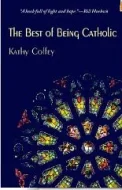
Easter as a Verb–from THE BEST OF BEING CATHOLIC

The Jesuit poet Gerard Manley Hopkins uses easter as an active verb, asking the Risen Lord to “easter in us, be a dayspring to the dimness of us, be a crimson-cresseted east…” The context of the quote is important: from “The Wreck of the Deutschland,” a poem where Hopkins struggles with the news that five Franciscan nuns have drowned in a storm at sea. We who are no strangers to such disasters recognize the situation he describes: “Hope had grown grey hairs, Hope had mourning on…”

If we deny such glumness, if we’ve never seen hope clothed in black, we fail to understand why Easter is such a gift. Perhaps it is only out of dark desperation that we can turn to the Resurrection and fully appreciate the potential for Christ himself to “easter in us.” Like the clueless disciples trudging to Emmaus, we ask him, “Stay with us…” (Luke 24:29)

That is our prayer in whatever dark trench we find ourselves. If we too have lost hope, enthusiasm or even interest, it doesn’t seem to bother him. Somehow, he rekindles the dormant spark so it becomes an inner flame. He gladly joins a long walk and conversation, winding it up, typically, with a meal.

The message is kept alive by a community that walks and eats together, shares stories and stakes everything on this one wild hope. We agree with the poet Alice Meynell that our planet “bears, as chief treasure, one forsaken grave” (“Christ in the Universe”). Those who follow Jesus believe that he is our resurrection and life—not in some rosy heaven or distant future, but right here, right now.

Scripture scholar Luke Johnson explains that the Christian’s memory of Jesus is not like that of a long ago lover who died and whose short time with us is treasured. It’s rather like a lover who continues to live with the beloved in a growing, maturing relationship. Past memory is constantly affected by the continued experience of the other in the present. So the church’s memory of Jesus is affected by his continuous and powerful presence. Jesus comes to life again and again, just as he did for Mary, Peter and John that grey morning near the tomb.

Because of his life in us we can be vulnerable and weak in a world set on power and ambition. He brings intimacy to the lonely, peace to those in turmoil, strength to those weakened by illness. As he did during his life on earth, Jesus heals those in pain, welcomes those in exile, restores dignity to those in desperation, and comforts those who sorrow. He assures us all, “I created you for everlasting life. You are too precious to ever let you die. You will live forever.” For the frightened, discouraged, hesitant person in each of us, Easter spells life, love, and hope.

TO BE CONTINUED…

The Joy of Being Catholic

“The Church is not a refuge for sad people. The Church is a house of joy.”   -Pope Francis

In Kathy Coffey’s latest article, The Joy of Being Catholic,  she offers reasons for our Catholic joy:

When Catholics are baptized, the Christian community welcomes them “with great joy.” Not with an agenda, criticism, challenge, or a 14-page questionnaire. Instead, new members are welcomed with the “great joy” (Lk 15:5) of the shepherd who hoists the lost sheep onto his shoulders, focused more on love than sin.

You can read the rest of the article here. 


Belief in Resurrection–from THE BEST OF BEING CATHOLIC

Easter belief explains why the funerals of the El Salvadoran martyrs were punctuated with applause and cries of “resurrexit!” Our belief in resurrection releases us from all that drains, demeans and dehumanizes, liberating us into the glorious freedom of God’s children.

Mark’s original ending to the Easter story sounds so disheartening that later editors added a more upbeat conclusion. He wrote of women who “were terrified so they said nothing to anyone” (16:8). Rather than a “klunker,” that may be an invitation. WE must continue the story. As Dom Helder Camara of Brazil wrote, “We Christians have no right to forget that we are not born to die; we are born to live. We must hold on to hope…since we have the deep certainty of being born for Easter.”

News this good is best expressed in song. Some of the finest Easter music is Handel’s “Messiah.” Imagine a dynamic gospel choir, clothed in red robes. They sway, they clap, they sing full-throated. The orchestra adds brass, drums and strings to energize the alleluias. It’s traditional for the audience to stand for the Alleluia chorus, in tribute to a splendid expression of the human spirit. On tiptoe, they applaud so intensely that the air rings with the clapping. It is a splendid image for the best news we could ever hear: “He is not here, but he has been raised.”

Good Friday Liturgy

Excerpted from THE BEST OF BEING CATHOLIC

Many wise traditions know the importance of naming one’s loss or sorrow, since suppressing it only makes it worse. Indeed, Thich Nhat Hanh suggests cradling our broken hearts as tenderly as we would a sick and crying child. In a particularly Catholic way, abstraction such as “suffering” is translated to tangible, visible word and gesture in the liturgy. Furthermore, it links our individual stories and struggles concretely, not just verbally, to the over-arching Story of Christ’s redemptive suffering.

My rule of thumb for Good Friday liturgy is “when we do something only once a year, pay attention.” So I focus on three parts of the service that move me especially.

The Presider’s Prostration
Catholic liturgy at its best speaks through symbol or gesture, not needing many words to convey meaning. For instance, submersion in the waters of Baptism, lighting the Easter candle, or offering a cup of wine all speak eloquently without verbiage.

The Good Friday service begins with a silent procession (robust singing would be completely out of place), and the presider prostrating himself before the altar. We see this action only once a year: what does it say?

Different people probably have different interpretations at different times of their lives. To me, it said starkly, “We killed God.” Not to become morbid, but to some extent, we are all guilty. We have killed that divine spark in each other, through a callous word, a harsh condemnation, a heavy hand.

The presider speaks for all of us as he lies face down on the floor. “This, my friends, is what we’ve done to the finest human/divine being who ever lived.” Words can’t touch the tragedy: symbolically, we all lie flat on our faces.

Veneration of the Cross

People seemed drawn to the crucifix: to touch it lightly, cling to a hand, or kiss the feet. What is the compelling power of this instrument of death, used by Romans over 2000 years ago? As our pastor pointed out, it’s not the cross; it’s the corpus. To simply revere the cross would be like honoring Martin Luther King, Jr. by hanging up a gun.

Father Richard Rohr describes the corpus in Wondrous Encounters: Scripture for Lent, “Jesus’ body is a standing icon of what humanity is doing and what God suffers ‘with,’ ‘in,’ and ‘through’ us. It is an icon of utter divine solidarity with our pain and our problems.”

Each person who approached it that evening bore some kind of sorrow. And they were only a few, representing millions more outside our church. Scratch the surface of any group; you’ll find the tragedies. In a family, a staff, or a work site, the stories of suffering run deep. Add in the veterans of Iraq or Afghanistan, the physical and mental aftermaths of war and the ripple effect on their families—an immense tide of suffering crashed at the foot of the crucifix.

Those who venerated the cross came close to the crucified Jesus to find meaning in their own burdens. Connecting their pain to his meant that they didn’t suffer alone. Wave after wave of people in vast variety approached: the lovely couple whose daughter died last year in a freak accident, the vulnerable elderly who could barely bend to touch it, a woman battling cancer, the wife of an Iraq veteran addicted to painkillers, an obese woman whose childhood hungers still drove her to eat, jeopardizing her health. The children were especially touching, quietly extending their thin arms, and perhaps whispering, “I’m sorry, Jesus, that you had to die like this.” Knowing his magnificent courtesy, Jesus would somehow touch those who touched his cross.

Holy Week

Holy Thursday

Jesus’ words at the last supper are important because they occur so near the end of his life, a privileged place. Here Jesus addresses one of the hardest things in any relationship—saying a final good-bye. To help retreatants appreciate this gospel section (John 14-17), I’ve asked them, “if you knew you were going to die tomorrow, what would you want to tell your loved ones?” Given the narrow time frame, they focus on what’s really important, and forget their petty concerns. Like the goodbye calls on September 11, the content is nothing but love.

Likewise, Jesus’ final discourse contains precious gold. Rarely does he mention sin. (So too, if we were telling our children, spouses, relatives or friends goodbye, it’s doubtful that we would catalogue their failures.) Instead, he speaks of a flow of love that began in creation, and that must wash even protesting Peter. “Unless I wash you, you will have no inheritance with me” (John 13:8). The stream image continues in the words of the Mass where the presider addresses God as “the fountain of all holiness.”

Jesus Betrayed

What we may need most in grief is presence. A woman dealing with multiple losses said appreciatively of her counselor: “I told her this was a 4-Kleenex day!”

That is our first, feeling response. Those who share it with us perform an important work of mercy. But at another level, human beings strive for understanding. Our urge to make meaning underlies the natural question, “why?” When we face distress, we seek other people of faith standing in a tradition to help us ground our sorrow within the meaning of Christ’s suffering.

That was exactly the frame of reference used by a woman visiting her brother Frank in the burn unit of a hospital. A nurse asked if she’d seen Mel Gibson’s film, “The Passion.” “Why would I need to see that?” she replied. “If I wanted to see the passion, all I’d need to do is watch you change Frank’s dressings.”

Healthy people reject a God who would cause pain. But they are drawn to one who suffers it with them.

In Luke’s account (22:48) of the betrayal, Jesus seems startled when Judas approaches him in the garden. “Judas, do you betray the Son of Man with a kiss?” he asks. The symbol of love twisted to betrayal mirrors the deepest human sorrow. We are hurt the most by those we love; the others we don’t care that much about.

Yet even before Judas’ lips have lifted from Jesus’ cheek, before the kiss has dried, comes forgiveness. Within Jesus is a deep pool of compassion, also experienced by the woman taken in adultery, the paralytic lowered through the roof and the man born blind. How hard it must be for Judas to expect revulsion and find instead unrelenting love. How hard it is for us, expecting retribution, to discover instead the infinite well of mercy.

As if Judas’ betrayal weren’t enough, Jesus must also endure Peter’s too. After Peter’s triple denial, one line is heart-breaking: “The Lord turned around and looked straight at Peter…” (22:61). What hurt that look must contain; it prompts Peter to “weep bitterly.”

But another emotion is there as well, a hope that prompts Peter to repent. He and Judas do the same thing, but respond differently. When Jesus asks “Do you love me?” three times, and Peter answers yes, the slate is wiped clean. He is completely forgiven.

The message this gospel contains is that there is nothing Jesus cannot forgive. We live out the rest of our lives within that look, knowing that it falls not only on us but on our most despised enemy. No matter what any of us have done, we simply cannot move outside the circle of God’s compassion.

Lent, Continued

Jesus’ integrity and earnestness is born of his desert experience. In that harshness, with no modern conveniences, he could have died. Because he survived, he can speak authentically of God’s sustaining presence there—or anywhere. Just as Jesus would say that the Prince of this world has no hold on me, so we too belong to God, not to anything that threatens.

Prayer, fasting, and almsgiving are traditional Lenten practices. The first is a call to live more reflectively, taking time with God, reading scripture or other inspirational books, journaling, or listening for God’s voice in the silence. The second isn’t guilty dieting, but a practice of many religious traditions which encourages saying no to ourselves, instead focusing on our hunger for God. In solidarity with the hungry throughout the world, we create an empty space for God to fill. Fasting reminds us that humans don’t live by bread alone and that restricting our physical pleasures can turn us towards spiritual richness. Almsgiving, what we do for others, springs from gratitude that God has given us much. If money is tight, we clean out closets, donating clothes that don’t fit or household objects that aren’t used.

Questions for Lent

Setting the Tone

Whatever Jesus goes through, he breathes into us. The story told on the first Sunday of Lent, about Jesus’ temptation, sets the tone for the season to follow. So, if he endures a desert struggle, so do we. If he must assess his priorities in response to the devil’s challenges, so must we. And if he turns from the dark, destructive voice to the life-giving one, we do the same pivot.

It’s an excellent time to ask ourselves, as we should regularly: What’s going on inside? What am I hungering for? What matters most? Lent is the ideal time to tackle the tough questions: Where have we become inauthentic or sluggish? What have we neglected? Where do we need to spend more time, money or energy? How have we squandered our gifts? Knowing that physical privations are secondary to emotional suffering, we burrow deep into the soul. What obstacles block the pathway to God? What selfishness strains our compassion for others?

Lent: Places to Pause

from The Best of Being Catholic

An annual season of penance and reflection is common to many traditions, for example the Muslim Ramadan. So what makes a Catholic Lent unique? What are its best parts?

As with most things Catholic, a big part of the answer lies in the sensory connections. Sometimes, in giving a catechetical workshop, I’ve asked the audience to remember the Lent of their childhoods. A wealth of sense impressions emerges: the fragrance of incense, the singing of “Stabat Mater,” the taste of tuna casserole or fish sticks on Friday, the soft swish of ashes on a forehead, and with older people, the draping of the statues in purple. No one ever mentions the headier doctrines. Instead, it’s immediately clear: messages engraved on all five senses endure. So while this is not a complete or doctrinal approach to Lent, it describes some of the highlights which have touched people enough to change their lives.

Lent Begins: Ash Wednesday

People unaware of this date may wonder why co-workers or passers-by have a large smudge of what looks like dirt on their foreheads. This is part of a ritual where ashes are marked in the form of a cross on each participant. A slight change in the formula spoken when ashes are given is significant: “Turn from sin and trust the good news.” Sin in the Hebrew context was anything less than the fullness of what God wants us to become. While the media and the grapevine may hum with news of “giving up”  (alcohol, chocolate, meat, etc.) for Lent, the real fast is from what destroys us, the bad memories, overstimulation, and worries that will sicken us if we focus on them.

No matter what the darkness in our past (argument, illness, divorce, betrayal), the dynamic of Lent is to name it, not deny it, treat loss with gentle kindness, then move on. Whatever vortex threatens to suck us in, we look to the hope offered by Jesus, his dear and welcoming embrace. We know we can make this passage because we’ve done it before, just as our spiritual ancestors the Jews left the slavery of Egypt.

Dorothy Stang, Part 2

Editor’s note: This is part 2 of a 2 part series.  Read part 1 here.

Enter the villains. The ranchers hire gunmen who shoot her to death on February 12, 2005. Seeing the gun, Dorothy doesn’t run or plead for her life, as most folks would. Fear would’ve been natural and understandable. Instead she pulls out her Bible and reads the Beatitudes aloud. The divine power transcends human limitations; in those final moments, she imitated Christ. She must’ve spent a lifetime preparing for that climax; now she teaches me how to live.

Breathing a deep lungful of piney mountain air, scented with sage, at home in the Rocky Mountains, I recall Dorothy’s joy outdoors. Without much institutional church, she finds God in the green canopy of trees, the cathedral of forest. Dorothy reminds me that when we lose our sacred connection to the earth, we’re stuck with small selves and petty concerns. In film footage, she proudly shows off a tree farm, exulting, “we CAN reforest the Amazon!”

Dorothy has encouraged me to stop eating beef, since intensive grazing requires destruction of the rainforest. I’m learning “green” alternatives to wasteful habits. Like most North Americans, I have enough stuff and now lean towards a simpler life. David explains, “she was so in love with what she was doing, she didn’t notice her dirt floor, primitive plumbing, no electricity.”

“Holy” once meant pious and passive. But Dorothy models how to raise Cain and act for justice. As we baby boomers age, Dorothy is patron saint for slow butterflies and reluctant caterpillars. She didn’t remain captive to her traditional upbringing. She probably could’ve hunkered down into the retirement center, counted her wrinkles and kept careful tabs on her ailments—as some older folk do. Instead, vivaciously, she tried new things, journeyed to new places. Her face is so youthful, it’s hard to think of her as 73. If I want to look that luminous at that age, I too must shed fears and take risks.

I want to love as gladly and fully as she did. It’s easy to get caught up in trivia: social commitments, work deadlines, domestic chores. But is this how we want to spend the precious coinage of brief lives? At Dorothy’s funeral, her friend Sister Jo Anne announced, “we’re not going to bury Dorothy; we’re going to plant her. Dorothy Vive!” If I want that immortality, I should examine what seeds I’m planting now, how I’ll live on in memory.

Dorothy has ruined my easy cop-out: how can one small person offset complex and apparently hopeless wrongs? Dorothy and I are the same height, 5’2”. Yet look what this giant accomplished: her killers’ trials, televised to every Brazilian classroom, have given children hope.

Her family and community won’t pursue canonization, preferring to give the poor the money that cause would require. Many already consider Dorothy a saint and martyr—in the early church, that’s all that mattered. As one biographer said about St. Catherine of Siena, “someone must’ve told her women were inferior. She clearly didn’t believe it.”

Oscar/Olympic Heresy?

I know: saying this, I’ll be pummeled with little gold statues, medals and ice skates. But at what point will humanity outgrow competition? When will we say, “Here’s what the Canadians did beautifully. These were the Russian strengths. And the U.S. excelled at this.”

It’s not quite the same as giving every kid who plays soccer a trophy—though I wouldn’t mind that either. By the time athletes, actors and actresses have reached the point of competing in the Olympics or being nominated for an Academy Award, they’re at the top of their fields. They’re all spectacular. Trying to compare Amy Adams and Judi Dench is like adding apples and oranges. Let’s simply say, “Cate Blanchett, you were riveting. Philomena, you were the very portrait of a formidable forgiveness.”

The original Olympic athletes received a laurel wreath. No record that they were painted gold, silver or bronze. Can’t the world’s finest come together for the sheer joy of the sport and the celebration of their skills? Why must some go home angry and disappointed? As for the movies: throw the parties. Parade the gowns and jewelry. Lift a glass of champagne to the fine art of film-making. But forget the envelope, the phony suspense, the awards that often seem arbitrary. Why must the human race be further divided?