Feasting on Thanks

Feasting on Thanks

by Kathy Coffey

Part 1 of an article which originally appeared in St. Anthony Messenger 

Often when asked to name a special family time, peoples’ responses cluster around meals: Christmas dinner, birthday parties, a vacation cook-out by the shore, a wedding banquet. Their intuition is sound: these special times are also sacred times. What better day to celebrate that connection than Thanksgiving?

It’s a holiday designed for thanks and feasting (though turkey and football have become part of the cultural accretion). The first Pilgrims who celebrated it were simply glad they’d survived a precarious ocean crossing in 1620, and had harvested enough corn to carry them through winter. They were grateful NOT for blissful, pain-free experience, but for the presence of God in whatever circumstance they met.

The Biblical Background

While atheists and agnostics celebrate Thanksgiving, people with religious ties are more likely to do so. A close connection between food and thanks is old as the Book of Wisdom: “That your children whom you loved might learn, Lord, that it is not the various kinds of fruits that nourish, but your word that preserves those who believe you!” (16:26)

Meals and gratitude are interwoven throughout the Hebrew and Christian scriptures. Apparently meals were so important to Jesus, his critics accused him of being a glutton and drunkard. When he wanted to define himself in terms of abundance, he told a hungry people who wanted the manna their ancestors had eaten: “I am the bread of life; whoever comes to me will never hunger, and whoever believes in me will never thirst” (Jn. 6:30-35).

When Jesus multiplied the loaves and fishes, he first gave thanks (Jn. 6:11). He followed the practice of his Jewish ancestors at the Passover meal when he gave thanks for bread before breaking it, and for wine before drinking it. For him, eating and thanking were intertwined activities. When his disciples thought he was a ghost, he asked for something to eat, and they gave him baked fish. Because he knew the sacred context for eating, he might be saddened by how thoughtlessly we drive through and chow down.

After Paul’s startling discovery on the road to Damascus that he’d been persecuting the wrong people, Acts records his healing, baptism, and a key detail: “when he had eaten, he recovered his strength” (Acts 9:19). He then poured energy into converting most of the known world. Who cooked that meal? And what was on the menu?  To Be Continued... 
“A People Ahead of their Time”

Check out Kathy’s article on Sept. eCatechist.com, which starts, “I am a conference junkie…”

Spirituality and the Arts

Kathy Coffey Leads a Course  on  Spirituality and the Arts              

Tuesdays 6:30-8:00 pm

September 18 – October 16

For over 2000 years, Christians have learned their faith from stories, stained glass, music, sculpture, drama, poetry and painting. These arts speak to different age groups, learning styles and educational levels, offering a way to engage respectfully with a multicultural world. We are made in the image of a creative God; appreciating human creativity draws us closer to the Creator.  We’ll explore visual arts, literature and music in a context of beauty, where no interpretation is wrong.

Cost: $30 per person

Wellshire Presbyterian Church

2999 S. Colorado Blvd.

Denver, CO  80222

For more information, contact:

Dr. Holly Inglis

ph   303.758.2233, ext. 115
cell  303.478.2007
hinglis@wpcdenver.org

Vatican II Article by Kathy Coffey Wins First Place Award

Catholic Press Association recently announced its 2013 winners, and Kathy’s article received the following commendation:

BEST FEATURE ARTICLE – General interest newsletters

First Place

Catholic Update, Cincinnati, OH, “Catholic Update: The Universal Call to Holiness” by Kathy Coffey

The judges commented:

This article has great relevance to all people today because it explores how we can move closer towards God without expecting ourselves to be perfect. The author makes empowering points with eloquence and conviction.

LAS MUJERES OCULTAS DE LOS EVANGELIOS Esta Disponible

Debido a la alta demanda, el popular libro, Mujeres Ocultas de los Evangelios ya está disponible en español. Estas son las historias imaginadas de la mujer durante el tiempo de la vida de Jesús. ¿Te has preguntado acerca de la madre ausente en la parábola del hijo pródigo? Ella es una de las 19 mujeres cuya historia es finalmente dijo en Mujeres Ocultas de los Evangelios. Para comprar una copia de este libro en español, visite este sitio web:

(Español) Mujeres Ocultas de los Evangelios

  librosliguori@compuserv.com

Kathy Coffey Essay in National Catholic Reporter eBook

Best Catholic Spirituality Writing 2012 a collection of 30 of the best essays from National Catholic Reporter, includes Kathy Coffey’s article, “Praying with the eye of the soul.” 

It’s available from these eBook sellers for $9.99:

Easter Season: One of the Best Parts of Being Catholic?

By Blog Editor

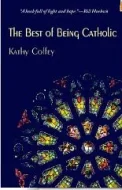
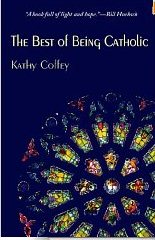
Easter is not just celebrated on Easter Sunday, in fact, the Easter Season is 50 days, and in Kathy Coffey’s latest book, The Best of Being Catholic, she writes why Easter is so important to Catholics.

The Best of Being Catholic has three sections:

1) The Beliefs We Cherish

2) The Seasons We Celebrate

3) The Company We Keep

In Chapter 13, which is focused on Easter, Coffey explains that it can be helpful to separate the religious meaning of Easter from all of the “cultural accumulations”

This happened experientially for me one year when Easter brought snow and sickness. Without lilies, bunnies, bonnets, egg hunts, pastels, or yellow marshmellow chicks, this was the Acid Test of the feast. In a friend’s mountain home, sniffling, coughing and watching dreary weather, would the message of resurrection still hold?

Indeed it came powerfully, through a totally unexpected channel: clearing skies and sunlight gradually stroking the mountaintops. What had been grey fog parted to reveal luminous peaks, emerging slowly. It echoed the absence and presence/hidden and revealed/hide and seek themes of this season. The resurrected Jesus may be unrecognized or invisible, but is still with his friends in a less physical way.

If there had been musical accompaniment, those mountains streaked with sun would’ve invited the Alleluia chorus, belted loudly. The mountains unfurled banners of good news: granite heavily grounded, yet airily sweeping the skies. While it’s not our traditional image, a healing sleep without coughing fit Easter nevertheless: joy unexpectedly found in the midst of sorrow.

TO BE CONTINUED…

The Best of Being Catholic Reviewed in Spirit & Life

Best of Being Catholic

By Blog Editor

Kathy Coffey’s latest book, The Best of Being Catholic, was recently reviewed by Spirit & Life Magazine  by Mary S. Sheridan.  She explains that while Catholics have heard much bad news over the past year, “Kathy Coffey tells the “light” and “hope,” through an eclectic mix of reflections, stories (her own and those of others), facts, and information—all positive—about the Catholic Church today.”

Sheridan concludes that given the book’s focus on Catholic culture, it would be appropriate for new or inquiring Catholics, “But its real value, in my opinion, is in reminding discouraged Catholics that there is more to the Church than problems.”

To read the full review, visit this link: Spirit & Life, Book Reviews, (March/April 2013)

To read other reviews of The Best of Being Catholic, visit:

Introduction and Review by Publisher’s Weekly. 

Review by National Federation of Priests’ Councils

Review in Hark Blog (Denver Post)

Darkness and Light: A Reflection on Good Friday

By Blog Editor

Kathy Coffey was recently featured in the March 2013 issue of St. Anthony Messenger.  Coffey writes about Good Friday, and the role that acknowledging suffering can play in Catholicism:

Many wise traditions know the importance of naming one’s loss or sorrow because suppressing it only makes it worse. Buddhist monk and author Thich Nhat Hanh suggests cradling our broken hearts as tenderly as we would a sick and crying child.

In a particularly Catholic way, an abstraction such as “suffering” is translated to tangible, visible word and gesture in the liturgy. Furthermore, it links our individual stories and struggles concretely, not just verbally, to the overarching story of Christ’s redemptive suffering.

To read the rest of “Darkness and Light: A Reflection on Good Friday,” visit the March issue of St. Anthony Messenger.

Best of Being Catholic Reviewed in “Hark” Blog

By Blog Editor

John Kane recently reviewed Kathy Coffey’s latest book, The Best of Being Catholic, in the Hark blog, which is housed at the Denver Post.

Kane begins with a disclosure that he has worked together with Kathy Coffey for a number of years.  He explains that like Coffey, he was also a little bit worried about the topic of the book, worried that it might be “just another counterbalancing catalog, some long list of “good things?”

Instead, Kane explains that the book is “realistic, critical at times, reflective, suggestive-with the good poet’s eye for endless detail and concreteness, but the good writer’s ability to move things even while reaching deep and wide.”

Kane continues: “Reading made me think of a group of friends meeting over wine or beer, telling stories, sharing memories (quirky and even strange), yet all in atmosphere of deep affection for things really good.”

To read his full review, visit the Hark blog on the Denver Post website: “‘The Best of Being Catholic’ a good gift for discouraged members at Christmas”